Nearshoring Freight Volume Caribbean: What's Shifting
The Quiet Boom Nobody Warned Warehouse Managers About
You know what kills warehouse efficiency faster than anything? Getting caught flat-footed by a volume surge you didn't see coming. And right now, nearshoring freight volume Caribbean operations are absorbing is climbing at a pace that's outrunning most operators' planning cycles.
I've been in logistics long enough to remember when Caribbean ports were mostly handling tourist goods and rum. That's not the story anymore.

Companies are pulling manufacturing out of Asia — China especially — and planting it in Mexico, Honduras, Guatemala, Colombia. And guess what sits right in the middle of those trade lanes? Caribbean transshipment hubs. Ports like Kingston, Freeport, and San Juan are seeing container dwell times spike because the infrastructure wasn't built for this load. We're talking about facilities designed for 2008 traffic volumes handling 2024 demand.
What Nearshoring Actually Does to Your Receiving Operation
Here's the thing — nearshoring doesn't just change where freight comes from. It changes the *rhythm* of how it arrives.
Asian manufacturing runs on long lead times. You'd order 90 days out, containers would batch up, and you'd get this big predictable wave. Nearshore manufacturing is faster and more reactive. Smaller orders. More frequent shipments. Shorter windows between PO and delivery.
We had a client in Doral last year — mid-size apparel distributor — who switched a Honduras vendor from quarterly bulk orders to bi-weekly smaller runs. Their receiving dock went from processing 3 large containers a month to handling 14 smaller loads. Same SKU count. Completely different labor model. Their receiving team was overwhelmed inside 60 days.
Nearshoring freight volume Caribbean routes carry tends to be higher frequency, lower cube per shipment. If your WMS isn't set up to handle that cadence, you're going to see receiving backlogs pile up fast.
Three Things That Break First
From what I've seen across multiple operations, here's what cracks under nearshoring pressure:
1. **Appointment scheduling** — More frequent inbounds means your dock calendar fills up before your team realizes it. Carriers start free-styling arrival times. 2. **ASN accuracy** — Nearshore vendors, especially newer ones in Central America, don't always have tight EDI processes. You get surprises at the dock. 3. **Labor allocation** — Your crew was sized for batch receiving. Now you need steady throughput staffing. Those are two different headcounts.
I've seen operations absorb $47,000 in damaged goods in a single quarter because inbound product was sitting at the dock door unprocessed. Not because anyone was lazy — because the system wasn't built for the new pattern.
Caribbean Transshipment Hubs Are Under Real Pressure
Look, I want to be specific here because I think a lot of people in Miami-area logistics underestimate how much nearshoring freight volume Caribbean transshipment is really taking on right now.
Freeport Container Port in the Bahamas moved about 1.7 million TEUs in 2023. They're projecting volume increases tied directly to nearshore manufacturing rerouting through the Atlantic. Kingston Wharves has been investing in chassis and crane capacity specifically because they're seeing the same pressure. These aren't small adjustments.
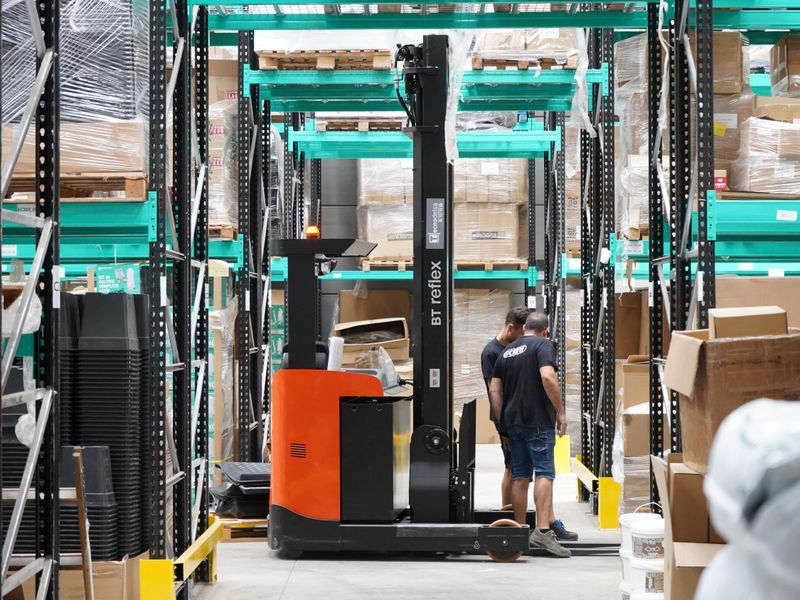
And here's where it gets interesting for 3PL operators in South Florida. As nearshoring freight volume Caribbean ports handle keeps climbing, the inland distribution piece — the final move from Miami port into Doral, Medley, Hialeah warehouse clusters — is getting more complex. More carriers. More partial loads. More coordination.
If you're still managing that inbound coordination on spreadsheets or email chains, you're going to miss something expensive.
What Good WMS Setup Looks Like for This
I've implemented SprintWMS in a few operations that were dealing with exactly this kind of nearshore-driven volume shift. The piece that makes the biggest difference isn't the flashy stuff — it's inbound appointment management tied directly to dock door assignment and labor queuing.
When a new ASN hits from a Honduras vendor at 11pm, SprintWMS can slot it into tomorrow's schedule automatically, flag it for a specific door based on product type, and queue the right receiving crew without a supervisor having to touch it. That matters when you're running 14 inbound loads a week instead of three.
Also — and I can't stress this enough — landed cost visibility. Nearshore freight costs differently than Asian freight. Shorter transit, but often higher per-unit freight cost. Your purchasing team needs that data fast to protect margins.

What to Actually Do About This Now
The nearshoring freight volume Caribbean logistics networks are dealing with isn't slowing down. Mexico alone added over 400 new manufacturing facilities with US investment between 2022 and 2024. That product has to move somewhere.
Here's a short checklist if you want to get ahead of this:
- **Audit your inbound dock capacity** — Not just physical doors, but labor bandwidth per shift
- **Talk to your Caribbean freight partners now** — Ask them specifically what volume growth they're projecting out of nearshore origin ports
- **Check your WMS configuration** — Is it built for batch receiving or continuous flow? Most older setups are batch-oriented
- **Model your labor at 2x current inbound frequency** — See where the bottlenecks appear before they appear in real life
The operators who win in this environment aren't necessarily the biggest. They're the ones who saw the nearshoring freight volume Caribbean shift coming and adjusted their floor operations before the crunch hit.
If you want to talk through how SprintWMS can help your receiving operation handle higher-frequency inbound loads without blowing up your labor budget, reach out and schedule a quick consultation. We've walked through this exact problem with operations across South Florida and the Caribbean, and the answers are usually more practical than people expect.
