Warehouse HVAC Energy Reduction: Stop Burning Cash
Your Climate System Is Either Working For You or Against You
Most warehouse operators treat HVAC like a necessary evil — crank it up, pay the bill, move on. I've done the walk-throughs. I've seen the utility invoices. We had a client running 180,000 square feet in Hialeah who was burning $38,000 a month just on cooling. That's not a climate control bill. That's a mismanagement bill.
Warehouse HVAC energy reduction isn't some sustainability PR play. It's a real P&L lever, and most operations managers are leaving serious money on the table because they haven't looked at their climate systems with the same rigor they apply to pick rates or receiving throughput.
The Biggest HVAC Mistakes I See Every Week
Here's the thing — the waste almost always comes from the same three places.
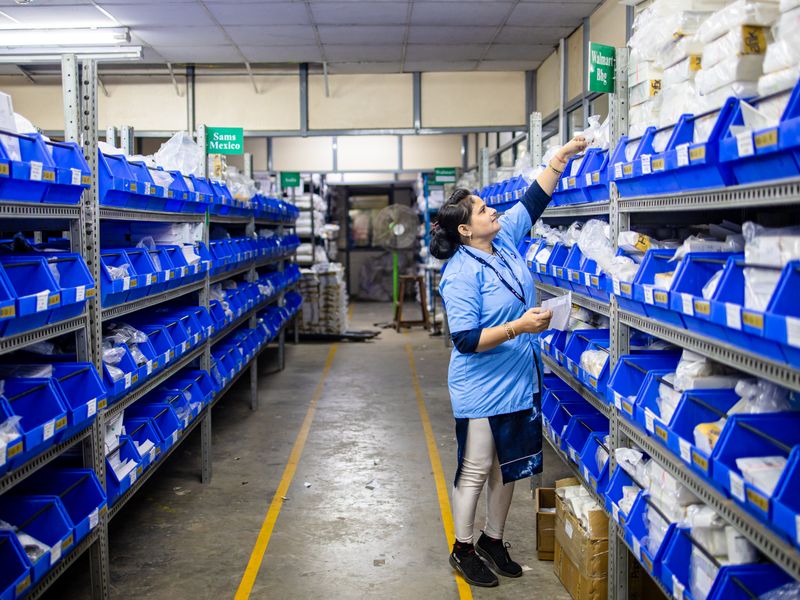
**Conditioning space you're not using.** Seriously, how many warehouses are you walking through where 30% of the floor is empty racking or staging, and the whole building's being treated like a single zone? That's lazy design and it costs real money. Proper zone control, where you're only actively managing temps in occupied work areas, can cut warehouse HVAC energy reduction targets in half on its own.
**Old equipment running constant cycles.** I've walked into facilities with units from 2004 still grinding away because nobody wanted to approve a capital expenditure. But here's the math nobody runs — a 20-year-old rooftop unit running at 65% efficiency versus a modern variable-speed system can mean a 35-40% swing in energy consumption. Pay now or pay way more later.
**No integration between the WMS and the building systems.** This one drives me crazy. We've got SprintWMS telling us exactly where people are working, which zones are active, what shifts are running — and zero of that intelligence is feeding into the HVAC controller. That's a solved problem. You just have to actually solve it.
Zone-Based Conditioning Is Not Optional Anymore
Look, I've never seen a properly zoned warehouse fail to hit meaningful warehouse HVAC energy reduction numbers. Not once. When you map your climate zones to your operational zones — receiving dock, picking floor, bulk storage, value-added services area — you stop paying to cool empty air.
The dock doors alone are a disaster in most buildings. Every time a bay opens, you're exchanging conditioned air with whatever Miami or Tampa is throwing at you that day. Dock seals, air curtains, and staging the dock approach so doors aren't open longer than 90 seconds — that combination alone knocked $4,200 a month off one client's bill in Doral last year.

What Smart Controls Actually Do (In Plain English)
Forget the buzzwords. Here's what a modern building management system integrated with your WMS actually gives you:
- **Demand-based ventilation.** CO2 sensors and occupancy data tell the system how hard to work. Empty zone at 2am? It drops to setback mode automatically.
- **Pre-conditioning before shifts.** Instead of blasting full capacity when your crew walks in, the system ramps up 45 minutes before shift start. Lower peak demand, lower demand charges on your utility bill.
- **Real-time energy dashboards.** You can see exactly which zones are eating budget. We used SprintWMS data feeds to trigger zone setbacks during slow pick periods and that alone contributed to a 12% reduction in monthly HVAC runtime.
- **Predictive load management.** If the system knows Tuesday afternoon is always your peak receiving window, it pre-stages temps before the dock activity spikes.
None of this is science fiction. It's available right now, and the payback periods I've seen run 18-30 months on most mid-size installations.
The Insulation Problem Nobody Wants to Talk About
You can buy the smartest HVAC equipment on the market and still lose the efficiency battle if your building envelope is garbage. Roof insulation, wall panels, door seals — these are foundational. I walked a facility in Fort Lauderdale where they'd just spent $280,000 on new rooftop units, but the loading dock seals were so worn you could see daylight through them. That's not an HVAC problem. That's a building problem masquerading as an HVAC problem.
Do the envelope audit first. Always.
Running the Numbers: What Warehouse HVAC Energy Reduction Actually Pays
Last month we ran the numbers on a 120,000 sq ft distribution center switching to a zone-controlled, WMS-integrated climate setup. Here's what came out:
- **Before:** $29,400/month average utility spend (cooling-dominated)
- **After zone control + smart scheduling:** $19,100/month
- **Annual savings:** $123,600
- **Total project cost:** $187,000
- **Simple payback:** 18.2 months
That's not a rounding error. That's real margin that goes back to the bottom line. And I'll tell you — in a 3PL environment where you're competing on razor-thin per-unit rates, $123K a year is the difference between winning and losing bids.
SprintWMS integration made this possible because we could tie operational activity data directly to zone conditioning triggers. Without that visibility into where the work was actually happening, we'd have been guessing.
Stop Treating HVAC as a Set-and-Forget System
You wouldn't let your WMS run without KPI reviews. You wouldn't let your pick rates slide for six months without investigating. So why are you looking at your climate control system once a year when the service tech shows up?
Warehouse HVAC energy reduction is a continuous process. Monthly utility reviews. Quarterly zone rebalancing as your slotting changes. Annual equipment performance audits. Build it into your ops rhythm the same way you track inventory accuracy.
Honestly, the warehouses winning on cost per order shipped right now aren't just faster — they're leaner on overhead. Energy is overhead. Climate control is energy. It's that simple.
---
**Want to see what warehouse HVAC energy reduction could mean for your facility specifically?** Book a 30-minute operations consultation with our team. We'll pull your utility data, map your operational zones, and give you a real number — not a ballpark. [Contact us today.](#)
